
EMO-GI #1
An ERASMUS+ funded project: 2025-ES01-KA220-HED-000351542

I’ve recently had the first online meeting of this new ERASMUS+ funded project.
The theme is Socio-Emotional Learning on Climate Change Mitigation via Geoinformation and AI (EMO-GI).
It is a follow up of two previous projects involving GIS: GI Learner and GI Pedagogy.
These developed a learning line for GIS (a sequence for acquiring GIS skills) and a model for teaching using GIS effectively, which remains quite influential).
This time the new project adds a socio-emotional element and links directly with young people’s growing awareness of climate change, and the arrival of AI.
It was mentioned in the latest newsletter from Eurogeo: the European Association of Geographers.
I have worked with colleagues from Eurogeo for many years and after a break of a few years I am looking forward to working with them again, along with some new colleagues from European universities I have not connected with before.
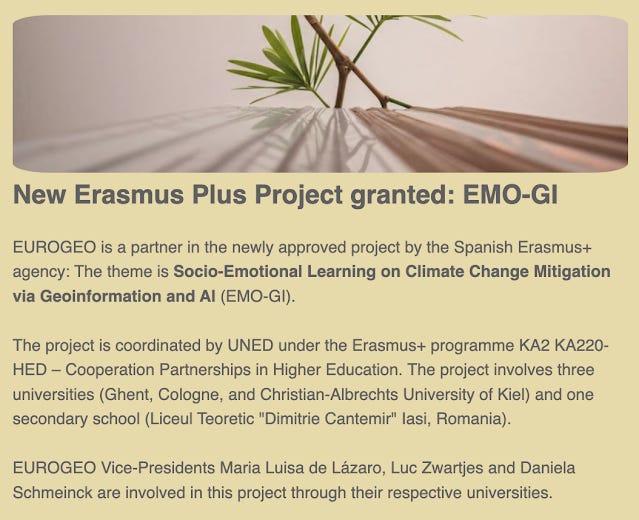
The project was funded by the Spanish Agency and will be lead by UNED: a university in Madrid which I have worked at previously.
EMO-GI aims to advance education for climate change mitigation by integrating socio-emotional learning (SEL), geomedia, and artificial intelligence (AI) into the professional development of primary and secondary school teachers.
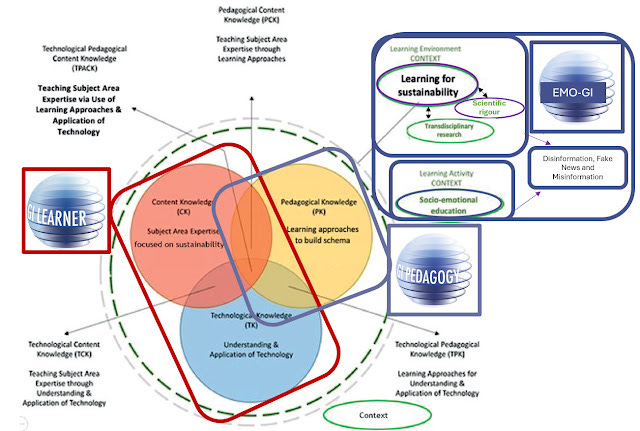
Image source: Adjusted TPACK model based on Rickles et al., 2017, p.16; Mirsha, 2019; Puertas et al., 2021; and De Lázaro, 2025.
The project is closely aligned with the priorities of Erasmus+ Key Action 2 , promoting sustainability education, countering misinformation, enhancing digital and emotional literacy, and fostering inclusion.
Specific project objectives include:
• Investigating the interconnections between climate change and emotional responses.
• Developing guidelines for the ethical and responsible use of artificial intelligence in exploring climate change and its emotional dimensions.
• Designing a socio-emotional learning (SEL) framework for teacher education and piloting its implementation in climate change mitigation initiatives
I’ve been doing plenty of pre-reading for the project and filing away research papers and other related documents which we will return to at various stages in the project. I have already found lots of relevant research papers and other documents which relate to the themes of the project which are around the emotional response that young people have to climate change and the role that AI plays in that.
I have an interesting set of documents already with some pointers for some of the early work that we have to do on the project.
One paper that stood out so far was by three academics from a university I have visited and worked with on a previous ERASMUS project: the University of Helsinki.
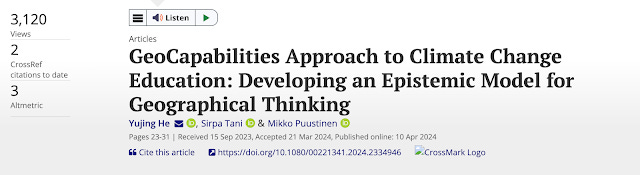
One interesting extra angle here is the connection withGeoCapabilities- a project I have also previously worked on, so there are good some synergies developing here - Sirpa Tani was also on the project team, along with a lot of familiar names.
I’ve been scouting around for AI and climate related content that is relevant and contemporary. There is no shortage of this for either of the two, but I’ve been interested in the overlap between the two - particularly where the emotional impact on young people and geographies of hope is concerned.
One area that we will have to consider is the ethics of AI use.
The environmental cost of AI is huge, and it will continue to grow. Some communities, where data centres are being planned or constructed or going to be impacted negatively. There has been a vast amount of research into this already...
We shall also be thinking about existing work done to explore the links between Climate and Mental Health.
The wheel of health shown here is a particularly useful resource in this regard.
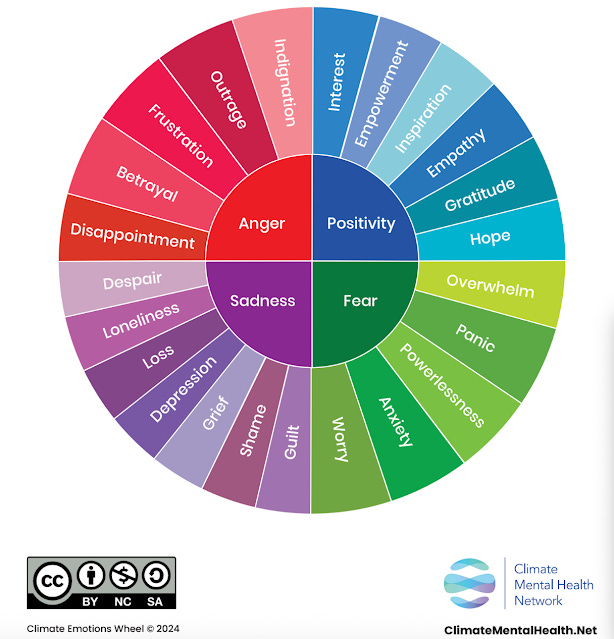
Their wheel is available under a CC license.
I will post updates here on Substack to keep you informed on how we are progressing and particularly how you might get involved in future events we will be organising.

Funded by the European Union. Views and opinions expressed are however those of the author(s) only and do not necessarily reflect those of the European Union or the European Education and Culture Executive Agency (EACEA). Neither the European Union nor EACEA can be held responsible for them.